Plant Iridoid Glycosides: Biological Properties and Pharmacological Potential
DOI:
https://doi.org/10.18388/wbg5q048Abstract
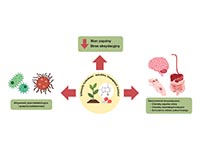
Iridoid glycosides are a diverse group of plant secondary metabolites with broad biological activity and promising pharmacological potential. This review summarizes their structural diversity, occurrence in plants, biosynthetic pathways, and biological properties. Particular attention is given to the biosynthesis derived from IPP and DMAPP, including the well-characterized secoiridoid pathway and the less understood pathway leading to compounds such as aucubin and catalpol. The most important biological activities of iridoids, including antibacterial, anti-inflammatory, neuroprotective, gastroprotective, and anticancer effects, are discussed with clear distinction between in vitro studies, animal models, and limited clinical evidence. The review emphasizes that most available data remain preclinical, while clinical studies are still scarce. Major limitations affecting the therapeutic application of iridoids include low bioavailability, variable chemical stability, lack of extract standardization, and difficulties in translating experimental findings into clinical practice.
Downloads
Published
Issue
Section
License
Copyright (c) 2026 Ewa Młodzińska-Michta, Natalia Gaik

This work is licensed under a Creative Commons Attribution 4.0 International License.
All journal contents are distributed under the Creative Commons Attribution-ShareAlike 4.0 International (CC BY-SA 4.0) license. Everybody may use the content following terms: Attribution — You must give appropriate credit, provide a link to the license, and indicate if changes were made, ShareAlike — If you remix, transform, or build upon the material, you must distribute your contributions under the same license as the original. There are no additional restrictions — You may not apply legal terms or technological measures that legally restrict others from doing anything the license permits.
Copyright for all published papers © stays with the authors.
Copyright for the journal: © Polish Biochemical Society.