New possibilities and perspectives for the use of fly maggots in clinical practice
DOI:
https://doi.org/10.18388/wq70yc30Abstract
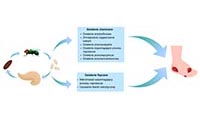
Maggot therapy is a method for treating chronic, non-healing wounds using live fly larvae that consume necrotic tissue, thereby cleaning the wound. The species most commonly used is Lucilia sericata (Meigen, 1826). Although clinically applied, the method raises concerns among patients and medical staff. Current research highlights the therapeutic potential of chemical compounds in larval excretions/secretions (ES), particularly against the growing issue of antibiotic resistance, as a complement to standard antibiotic therapy. Most studies focus on ES from L. sericata, while other fly species have been less explored. Investigated groups include Calliphoridae, Muscidae, and Sarcophagidae. Studies suggest ES may have antibacterial, antifungal, antiviral, and anticancer properties. This work focuses on the less-studied species and the properties of their ES.
Downloads
Published
Issue
Section
License
Copyright (c) 2026 Aleksandra Wyszyńska

This work is licensed under a Creative Commons Attribution 4.0 International License.
All journal contents are distributed under the Creative Commons Attribution-ShareAlike 4.0 International (CC BY-SA 4.0) license. Everybody may use the content following terms: Attribution — You must give appropriate credit, provide a link to the license, and indicate if changes were made, ShareAlike — If you remix, transform, or build upon the material, you must distribute your contributions under the same license as the original. There are no additional restrictions — You may not apply legal terms or technological measures that legally restrict others from doing anything the license permits.
Copyright for all published papers © stays with the authors.
Copyright for the journal: © Polish Biochemical Society.