The role of miRNAs in the pathogenesis, diagnosis, and personalized therapy of glioblastoma multiforme
DOI:
https://doi.org/10.18388/cjm9bt80Abstract
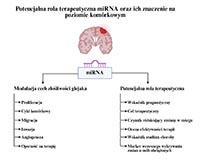
Glioblastoma multiforme (GBM) is a malignant, hypercellular, and invasive brain tumor characterized by high mortality and recurrence. Their strong heterogeneity, mitotic activity, microvascular proliferation, and foci of necrosis induce therapeutic resistance, resulting in a 5-year survival rate of only 5% in patients diagnosed with glioblastoma. Therefore, it is necessary to identify new targets to improve prognosis, better predict prognosis, and monitor treatment outcomes. It has been suggested that miRNAs—small, single-stranded, non-coding RNAs consisting of 20-22 nucleotides—may be potential candidates for clinical biomarkers in glioblastoma patients. They participate in the post-translational regulation of gene expression through RNA interference. It is believed that, due to their ability to control the biological processes underlying GBM development, miRNAs may aid in the design of drugs for personalized glioma therapy. This article presents the latest insights into the role of miRNAs in the pathogenesis and diagnosis of GBM and as a potential therapeutic target.
Downloads
Published
Issue
Section
License
Copyright (c) 2026 Anna Bielecka- Wajdman

This work is licensed under a Creative Commons Attribution 4.0 International License.
All journal contents are distributed under the Creative Commons Attribution-ShareAlike 4.0 International (CC BY-SA 4.0) license. Everybody may use the content following terms: Attribution — You must give appropriate credit, provide a link to the license, and indicate if changes were made, ShareAlike — If you remix, transform, or build upon the material, you must distribute your contributions under the same license as the original. There are no additional restrictions — You may not apply legal terms or technological measures that legally restrict others from doing anything the license permits.
Copyright for all published papers © stays with the authors.
Copyright for the journal: © Polish Biochemical Society.